Flowers are the soul of any wedding. They set the mood, define the color palette, and create the sensory experience guests remember forever. Choosing the right arrangement is both art and science. This step-by-step guide walks you through the entire process.
"Flowers are the poetry of nature, and your wedding is the poem they help write." — Decor By Pearls Floral Team
Step 1: Gather Inspiration
Create a mood board on Pinterest, saving images that catch your eye—not just weddings, but interior design, fashion, and food photography for color and texture ideas. Visit our wedding gallery for real floral designs.
Key questions to ask yourself:
- Do I prefer structured, formal arrangements or loose, garden-style bouquets?
- Am I drawn to monochromatic palettes or vibrant color mixes?
- Should flowers be the focal point or complement a larger design?
Step 2: Take Cues from Your Venue
Historic Palaces & Ballrooms: Grand spaces call for towering centerpieces with roses, hydrangeas, and cascading greenery.
Modern & Minimalist Venues: Clean spaces pair best with sculptural arrangements—monochrome orchids in geometric vases or single-stem ikebana designs.
Outdoor & Garden Venues: Use wild, meadow-style arrangements with locally grown flowers—cosmos, dahlias, lavender, and jasmine.
Beach Venues: Tropical blooms like frangipani, bird of paradise, and anthuriums complement coastal settings beautifully.
Step 3: Align Florals with Your Style
A classic bride in a structured lehenga pairs with formal bouquets of roses, peonies, and ranunculus. A boho bride in flowing silhouettes looks stunning with asymmetrical cascading bouquets featuring wildflowers and pampas grass. A modern bride is complemented by minimal, architectural arrangements.
Step 4: Build a Cohesive Color Palette
Use 2-3 core colors with tonal variations:
Monochromatic: Different shades of one color (blush, rose, burgundy) for sophisticated unity.
Complementary: Opposite colors on the wheel (purple and gold) for vibrant contrast.
Analogous: Adjacent colors (peach, coral, pink) for soft harmony.
Step 5: Create Depth with Texture
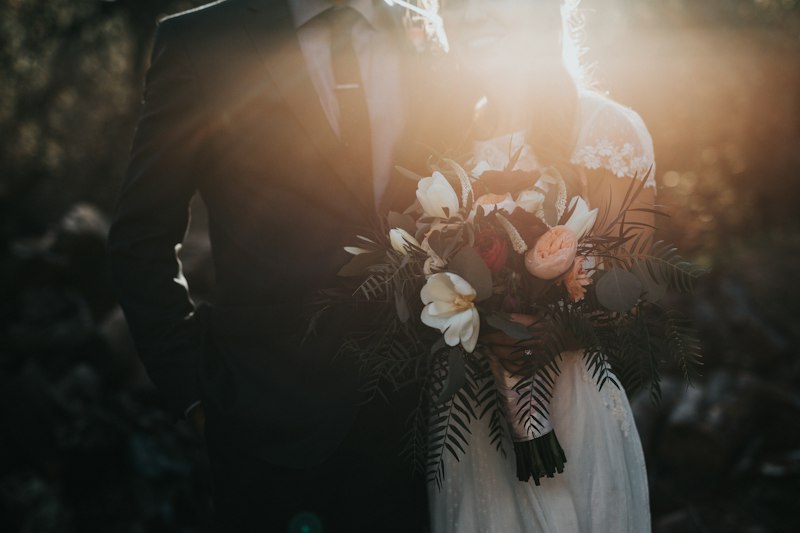
Professional florists layer focal flowers (peonies, dahlias), secondary flowers (spray roses, lisianthus), filler elements (baby's breath, astilbe), and greenery (eucalyptus, ferns). This creates depth and movement that single-variety arrangements cannot achieve.
Step 6: Consider Seasonality
Seasonal blooms are fresher, more vibrant, and more affordable. In India: marigolds thrive October-March, roses are year-round, jasmine in summer, tuberose July-November. Consult our expert team for personalized recommendations.
Step 7: Plan the Full Floral Journey
- Entrance: A floral arch sets the tone from arrival.
- Ceremony: Mandap florals are the visual centerpiece.
- Reception: Table centerpieces and bar arrangements create cohesion.
- Details: Hairpieces, boutonnières, and corsages tie everything together.
"The best floral designs feel effortless—but that effortlessness takes meticulous planning."
Final Thoughts
Your wedding flowers engage the senses—sight, smell, and touch—like no other element. Follow these steps with an experienced floral team to create arrangements that are beautiful and deeply personal.
Ready to Plan Your Dream Wedding?
Let Decor By Pearls turn your vision into a breathtaking reality. Our expert team is here to handle every detail with grace and elegance.

 May 11, 2026